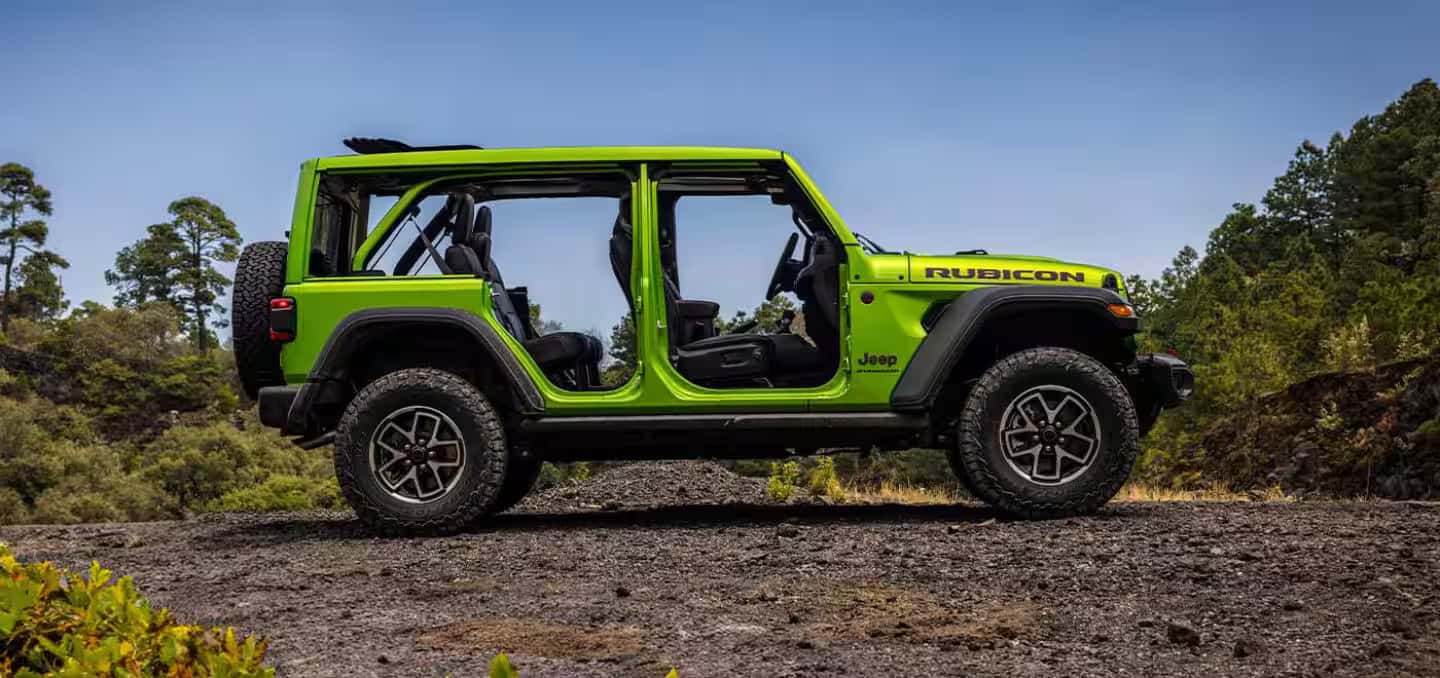
The return of the Ford Bronco has reignited the biggest rivalry in the 4×4 world. If you are cross-shopping the 2026 Jeep Wrangler and the Ford Bronco, you are choosing between two very different engineering philosophies.
The Bronco is designed like a modern SUV, using an Independent Front Suspension (IFS) for better road manners. The Wrangler sticks to its roots with a Solid Front Axle, prioritizing maximum durability and wheel articulation.
At Sidney CDJR, we know that tech specs are important, but durability is what gets you home from the trail. Here is why the Wrangler’s proven architecture still holds the crown.
Suspension: The “Death Wobble” Myth vs. IFS Fragility
You might hear Bronco fans talk about the Wrangler’s “steering feel,” but there is a trade-off they don’t mention: complexity and fragility.
Jeep Wrangler (Solid Axle)
Ford Bronco (IFS)
Uses a solid steel beam connecting the front wheels.
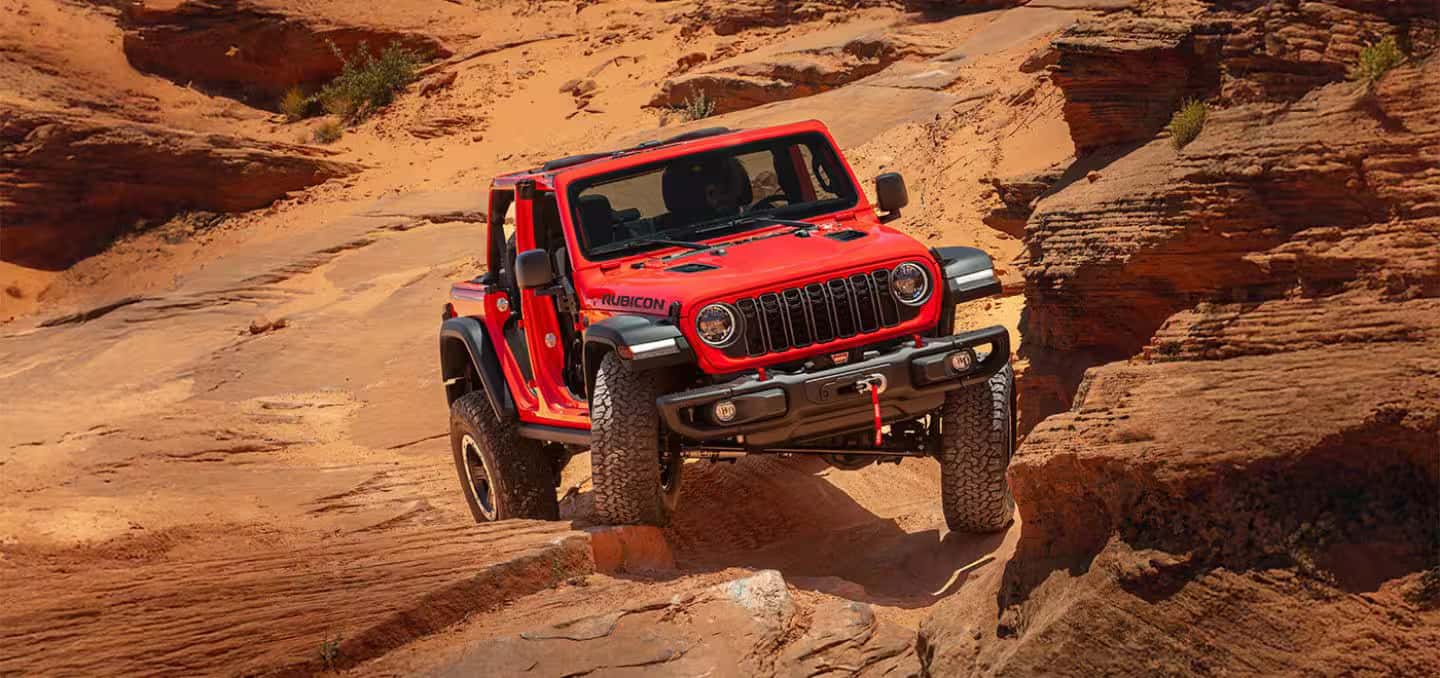
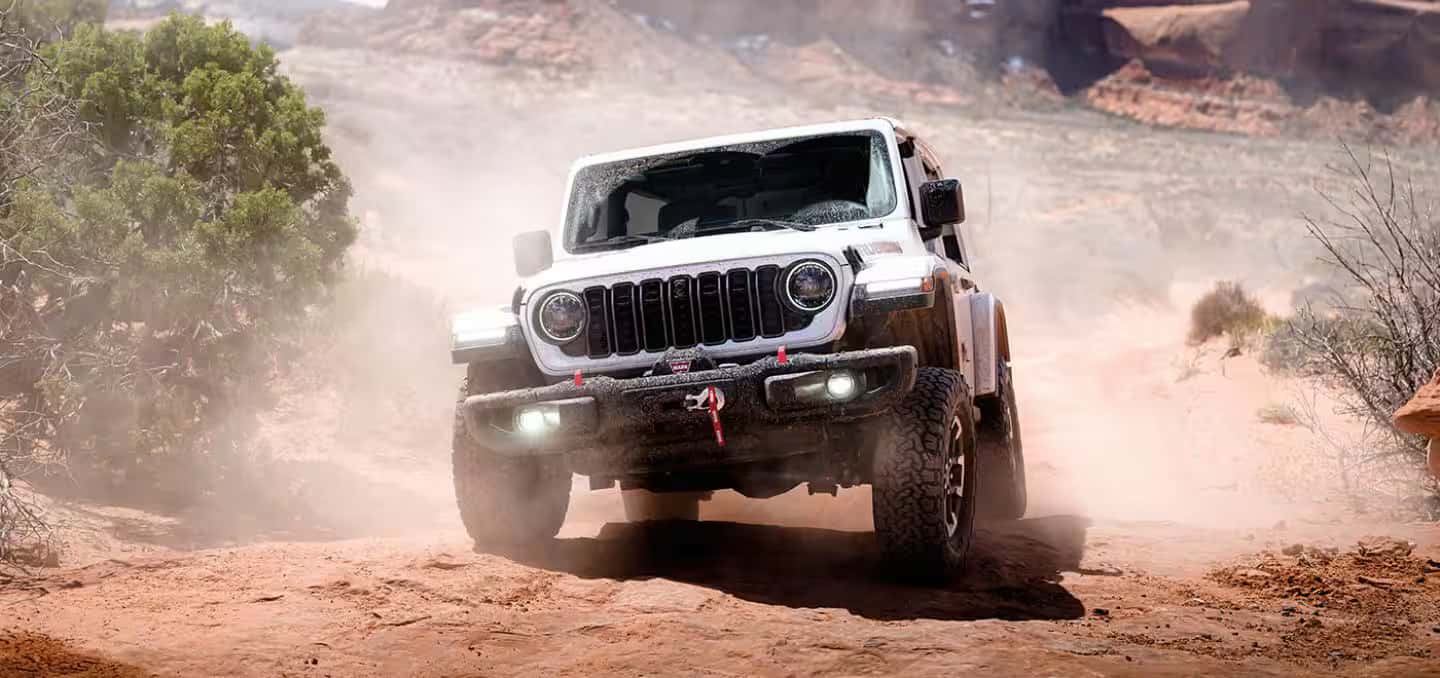
The Advantage: It is simple, incredibly strong, and forces the opposite wheel down when one wheel goes up (articulation). This mechanical leverage keeps your tires on the ground in off-camber situations where the Bronco might lift a wheel and lose traction.
Uses CV joints (constant velocity joints) and rubber boots to transfer power to the front wheels.
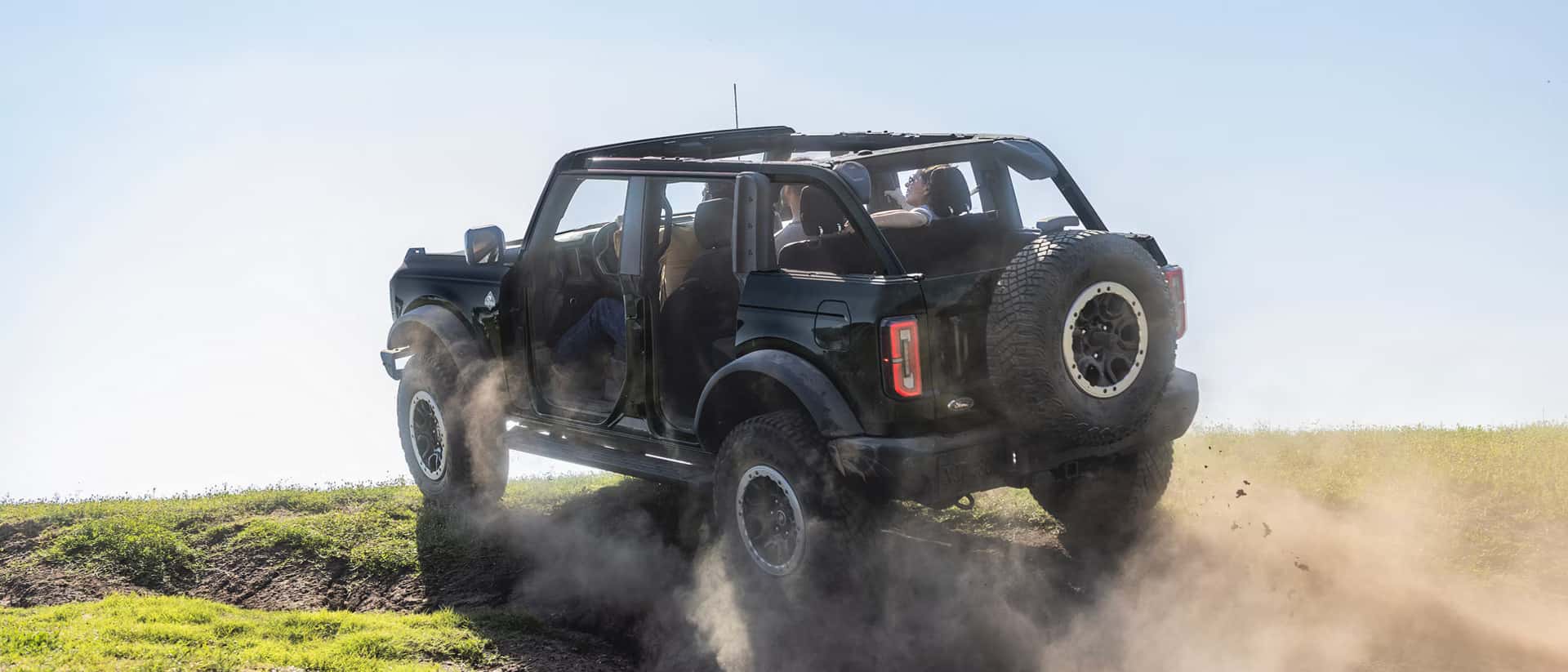
The Risk: In deep mud or when climbing over logs, these rubber boots can tear, letting grit destroy the joint. Additionally, lifting an IFS vehicle is expensive and complex, often requiring new control arms to keep the alignment safe.
Engine & Transmission: Naturally Aspirated vs. Turbo Only
Ford has gone “all-in” on turbocharging. The Bronco is only available with turbocharged engines (2.3L or 2.7L/3.0L). While powerful, turbos add heat and complexity.
The 2026 Jeep Wrangler still offers the legendary 3.6L Pentastar V6. This naturally aspirated engine has:
No Turbo Lag: Instant throttle response when crawling over rocks.
Simpler Maintenance: Fewer hoses, no intercoolers, and lower under-hood temperatures compared to the Bronco’s cramped engine bay.
The “Open Air” Experience
Both vehicles have removable tops and doors, but the Wrangler’s design is more user-friendly for the spur-of-the-moment adventurer.
Visibility: The Wrangler’s beltline is lower, and the windshield is more upright. This gives you a better view of the trail (and your front tires) than the high-sided Bronco.
Windshield: The Wrangler’s windshield can be folded down flat for a true open-air experience. The Bronco’s windshield is fixed in place.
Why Buy the 2026 Wrangler?
The Ford Bronco is a great SUV for the suburbs. But the Jeep Wrangler is a tool built for the wild. Its solid axle design is easier to modify, cheaper to lift, and tougher on the trail.
This vehicle is being built now. Contact dealer to reserve this vehicle and discuss options for locking in pricing and eligible incentives.
Vehicles identified as “Being Built” are pre-production vehicles that are not yet on the dealer’s lot or in transit. Pre-production computer-generated images may be shown and may not be representative of the vehicle listed.
MSRP for standard equipment plus optional equipment listed. Vehicle delivery date and other vehicle information, including pricing and incentives, are subject to change until the vehicle build is complete.
MSRP excludes additional charges including without limitation any delivery fees, government fees and taxes, title and registration fees, finance, filing and processing charges, emission testing charge, accessories and upfits.