



Chesrown CDJR of Sidney
For buyers in Sidney, selecting the right compact SUV comes down to analyzing the underlying mechanical architecture. The 2026 Jeep Compass and the 2026 Ford Bronco Sport are direct competitors, but their engineering approaches yield very different real-world results on Ohio roads. Chesrown Chrysler Dodge Jeep Ram has compiled the structural data and performance metrics to help you make an informed decision.
Before diving into the powertrain breakdown, you can view our current availability in our New Jeep Compass Inventory or learn how we prioritize transparent data on our Why Buy from Chesrown CDJR page.
To provide an accurate assessment, the data below compares the standard, entry-level powertrains equipped on both vehicles.
| Metric | 2026 Jeep Compass (Standard) | 2026 Ford Bronco Sport (Standard) |
|---|---|---|
| Engine Block | 2.0L Turbocharged Inline-4 | 1.5L Turbocharged Inline-3 |
| Horsepower | 200 hp @ 5,000 RPM | 181 hp @ 6,000 RPM |
| Torque | 221 lb-ft @ 1,750 RPM | 190 lb-ft @ 3,000 RPM |
| Transmission | 8-Speed Automatic | 8-Speed Automatic |
| Standard Drivetrain | Active Drive 4×4 | All-Wheel Drive (AWD) |
| Base Towing Capacity | 2,000 lbs | 2,000 lbs |
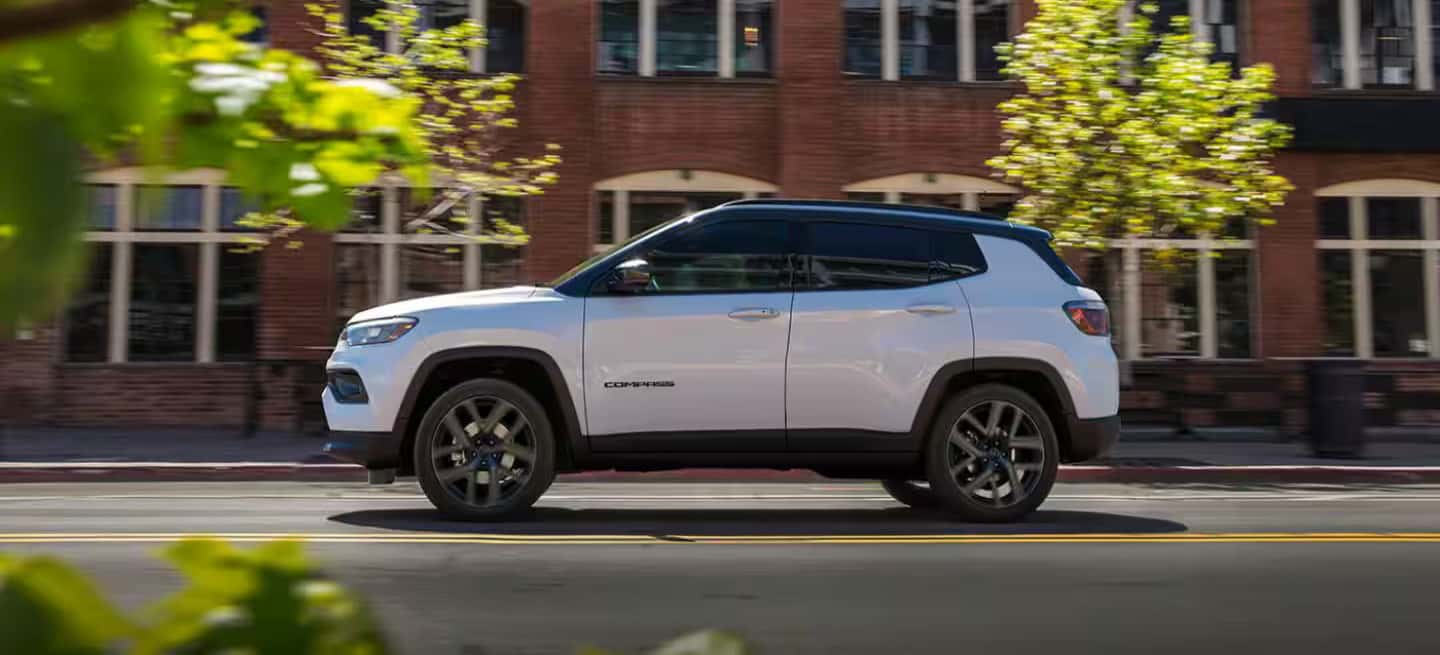 |
The most significant engineering difference between these two SUVs lies beneath the hood. The 2026 Jeep Compass utilizes a standardized 2.0-liter four-cylinder engine across its entire trim lineup. This block generates 200 horsepower and 221 lb-ft of torque. Conversely, the base Ford Bronco Sport relies on a smaller 1.5-liter three-cylinder engine that outputs 181 horsepower and 190 lb-ft of torque.
In plain English, the Jeep Compass generates more pulling power (torque) at a much lower engine speed (1,750 RPM compared to Ford’s 3,000 RPM). This means the Compass will accelerate from a stop sign much faster and merge onto I-75 with less engine strain. To match the baseline output of the standard Jeep Compass, Ford buyers are forced to pay for a higher, more expensive trim level to unlock their optional 2.0L engine. |
|---|
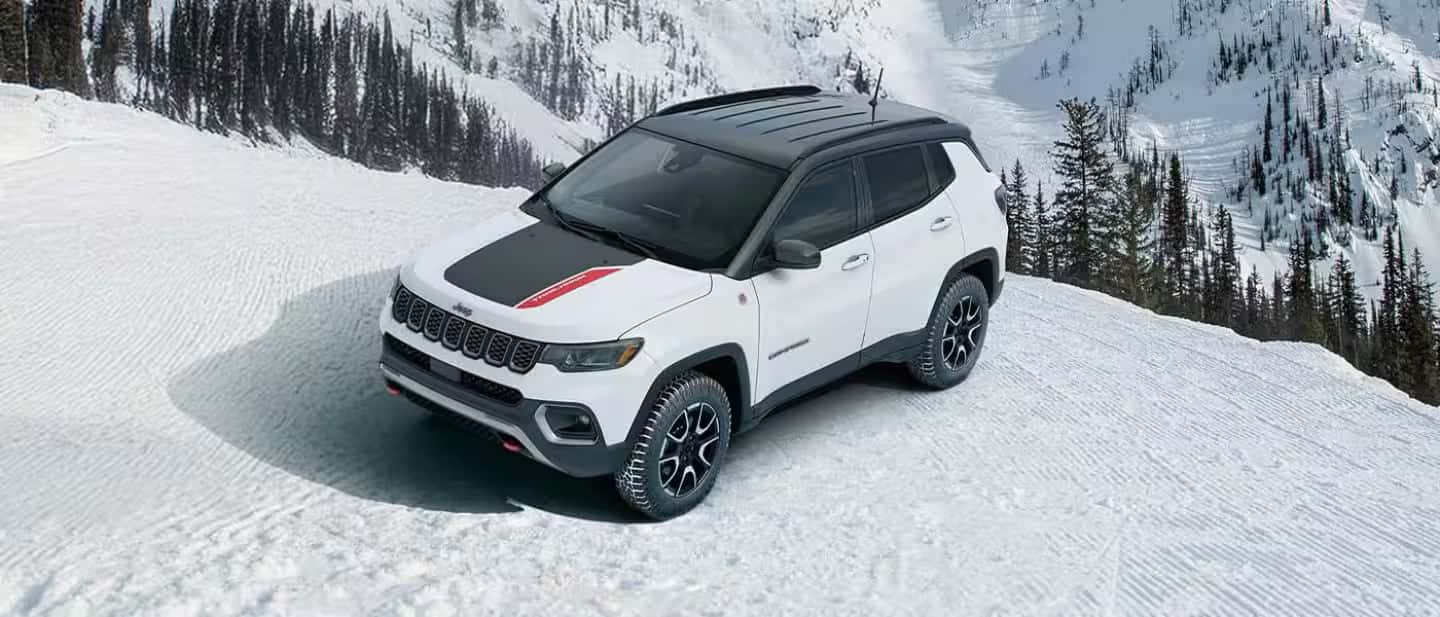
| Both vehicles are designed to handle adverse weather conditions, but their traction systems operate differently. The Ford Bronco Sport features a standard All-Wheel Drive system that primarily powers the front wheels, occasionally sending power backward when slip occurs.
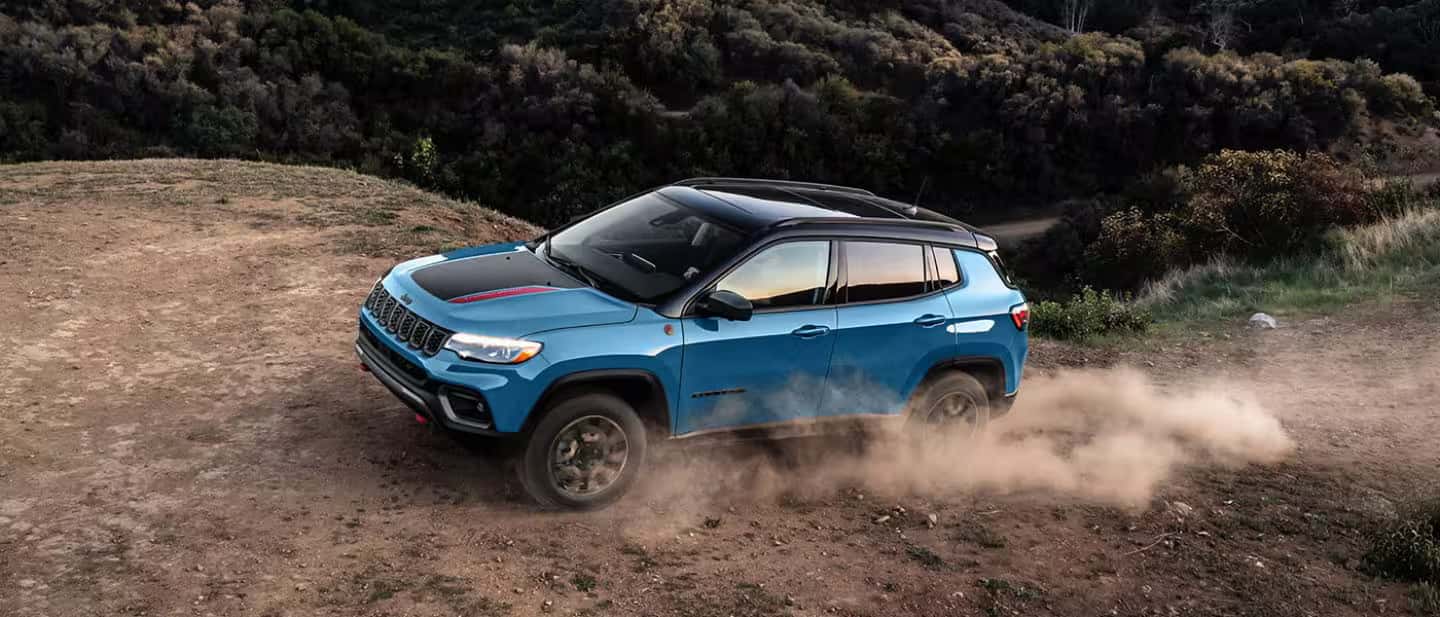
The Jeep Compass employs the proprietary Jeep Active Drive 4×4 system. This system relies on a fully disconnecting rear axle and advanced wheel-speed sensors. When driving on dry Sidney pavement, it completely disengages the rear wheels to reduce mechanical drag and maximize fuel efficiency. The millisecond the sensors detect rain, ice, or snow, the transfer case instantly engages true four-wheel drive. The Selec-Terrain Management System further refines this by altering transmission shift points and throttle response to maximize grip without requiring the driver to manually feather the gas pedal. |
 |
|---|
 |
Both the baseline Compass and the baseline Bronco Sport are rated to tow a maximum of 2,000 pounds. However, towing safely requires more than just a hitch. Because the Compass provides 31 more lb-ft of torque at a significantly lower RPM range, the engine does not have to work nearly as hard to pull a loaded utility trailer up a steep incline. The rigid high-strength steel chassis of the Jeep ensures that the tongue weight of the trailer is evenly distributed across the rear suspension, preventing the rear end from sagging and keeping your steering geometry aligned. |
|---|
When cross-shopping these two models, the data clearly shows that the 2026 Jeep Compass delivers superior baseline mechanics. By offering a larger, more powerful standard engine and an advanced 4×4 system out of the gate, the Compass prevents buyers from having to purchase costly powertrain upgrades just to achieve acceptable highway merging speeds. Visit Chesrown Chrysler Dodge Jeep Ram to test the throttle response and traction geometry of the 2026 Jeep Compass for yourself.